
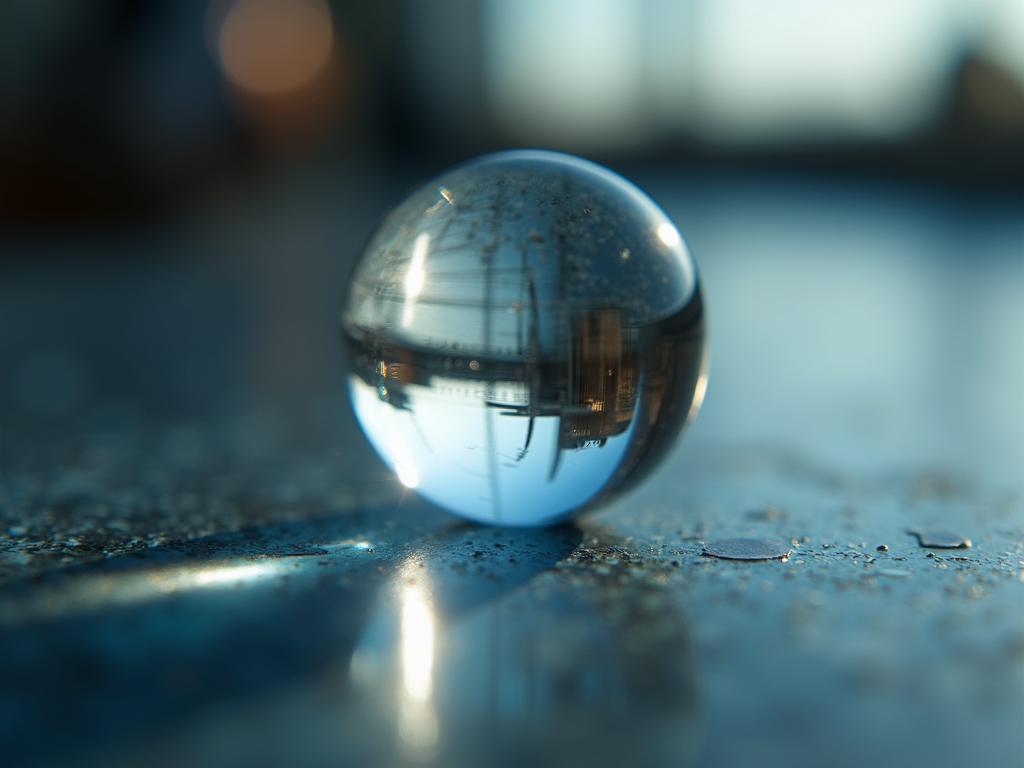
Borosilicate Glass (BK7)
Cost-effective glass with good transmission in the visible and near-infrared
General-Purpose Optical Glass
Borosilicate Glass (BK7) is one of the most widely used optical glasses for visible and near-infrared applications. It offers a strong balance of optical homogeneity, availability, ease of manufacture, and cost, making it a standard choice for lenses, windows, prisms, and beamsplitters in laboratory, industrial, and commercial optical systems. BK7 is best suited to controlled environments where extreme thermal, chemical, or radiation resistance is not required.
Is this material right for your application?
Use When:
Avoid When:
Consider Alternatives:
Visible or near-infrared transmission is sufficient
Cost-effective optics are required at scale
Standard lenses, windows, or prisms are needed
Operating environment is controlled (lab or indoor use)
Proven, widely available optical glass is preferred
Deep-UV transmission below ~330 nm is required
Mid-IR or long-wave IR performance is needed
Components are exposed to high radiation levels
Large temperature gradients or thermal shock are expected
Harsh chemical or outdoor environments are involved
Fused Silica – better UV transmission and thermal stability
Calcium Fluoride (CaF₂) – broader UV–IR transmission with lower dispersion
Sapphire – significantly higher mechanical strength and durability
Explore Related Optical Materials
Heading 6
Heading 6
Heading 6
Frequently asked questions about Barium Fluoride specifications and use-cases
FAQ
Q1. What wavelength range is BK7 typically used in?
BK7 is suitable for visible and near-infrared applications, typically from ~350 nm to ~2.1 µm.
Q2. Is BK7 suitable for imaging optics?
Yes. BK7 is widely used for lenses, prisms, and windows in general imaging and measurement systems.
Q3. Is BK7 resistant to moisture and harsh environments?
BK7 is non-hygroscopic and performs well in laboratory and industrial environments but is not ideal for extreme thermal shock.
Q4. What are common alternatives to BK7?
Fused Silica, Calcium Fluoride (CaF₂), and Sapphire depending on dispersion, thermal, and durability needs.
BK7 offers good optical homogeneity and low bubble content.
It is cost-effective and widely available.
Not suitable for deep-UV transmission below ~300 nm.